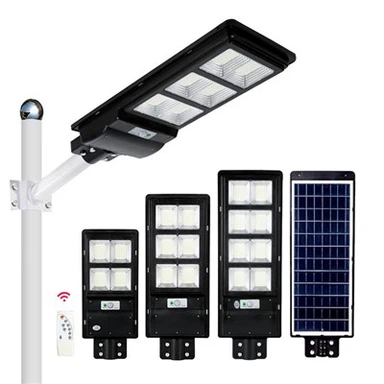

What Are the Advantages of External Power Supplies for Street Lights?
Jul 02, 2026
The external integrated smart power supply is an innovative solution for roadway lighting. By separating the power unit from the luminaire and integrating functions such as light sensing, dimming, and wireless programming, it significantly improves installation efficiency, operation and maintenance, and total lifecycle cost. This article provides a comprehensive breakdown of external integrated power supplies for street lights' definition, key advantages, solution comparisons, and application scenarios.
What Is an External Integrated Power Supply for Street Lights?
In traditional grid-powered street lights, the driver power supply is typically built into the electrical compartment of the luminaire. Additional components such as photocells or controllers are required to enable smart functions, and maintenance requires opening the fixture.
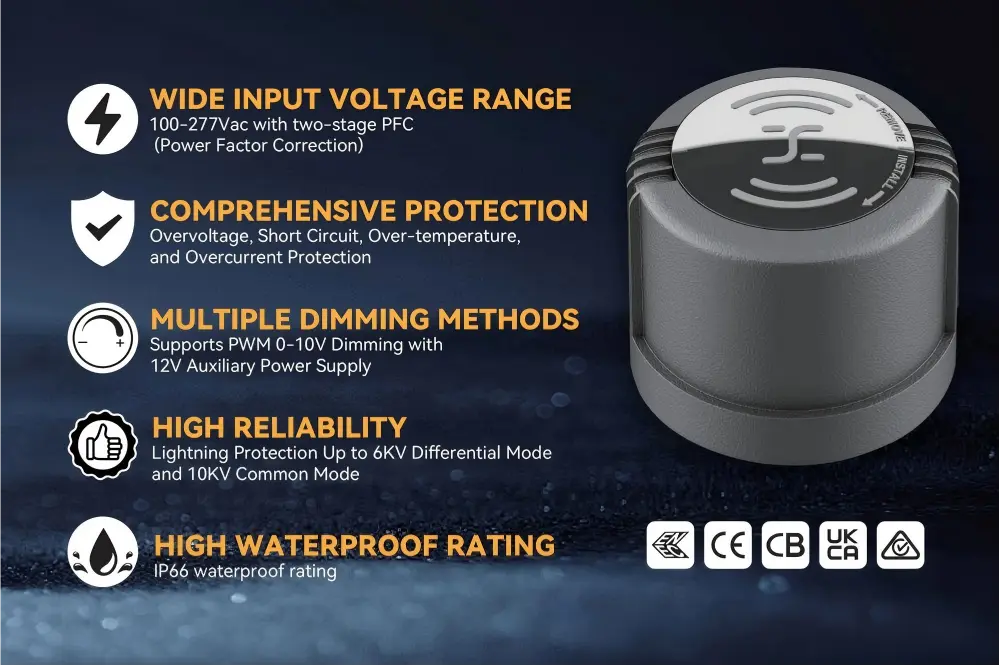
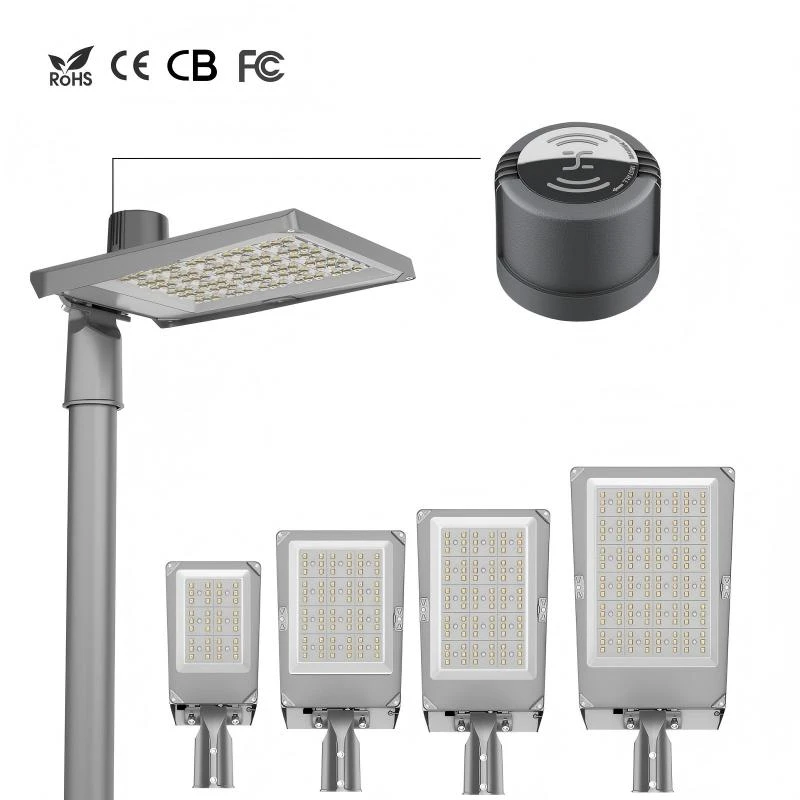
An external integrated power supply, by contrast, is a standalone unit that highly integrates three core capabilities: power driving, intelligent control, and environmental sensing. It is mounted externally on the luminaire using a plug-and-play knob structure.
The unit integrates the driver circuit, multi-point light sensing, NFC wireless programming, and scheduled dimming functions. It also features a complete protection system, including waterproofing, lightning protection, and circuit safety mechanisms.
In simple terms, it serves not only as the core power driver of the street light but also as the intelligent control terminal-enabling smart lighting without the need for additional external devices, while supporting fast on-site installation and replacement.
Key Advantages of External Power Supplies for Street Lights
1. Faster Maintenance with Plug-and-Play + NFC Programming
When a traditional built-in power supply fails, maintenance requires disassembling the entire fixture and opening the housing. This process is complex, time-consuming, and requires skilled electricians, with high risks and costs associated with working at height.
The external integrated power supply fundamentally solves this issue through its structural design. With a plug-and-play knob mechanism, the power unit can be replaced within minutes on-site without dismantling the entire luminaire or using specialized tools-greatly reducing working-at-height time.
Additionally, the top of the unit is equipped with NFC wireless communication technology. Without opening the housing, wiring, or even powering on the system, users can simply tap an NFC-enabled device to adjust parameters such as output current, timing schedules, and dimming settings. For large-scale projects, this eliminates the need for specialized programming tools. Even general maintenance personnel can complete parameter configuration efficiently.
Combined with a unified interface standard across the entire product range, power supplies of different wattages and functions can be freely interchanged. This significantly reduces spare part SKUs for contractors and simplifies inventory management.
2. Lower Total Cost Across the Entire Lifecycle
Many buyers focus only on the upfront cost of the power supply itself. However, the total lifecycle cost of roadway lighting spans multiple stages, including manufacturing, component procurement, logistics, warehousing, and long-term maintenance. External power supply solutions help reduce costs at every stage:
Hardware Manufacturing Cost: With the power supply moved outside, the luminaire no longer requires a large internal driver compartment. This allows for a more compact structure, reduces the use of die-cast aluminum, and lowers mold development and tooling costs.
Component Procurement Cost: The power unit comes with built-in light sensing, dimming, and timing functions, eliminating the need for additional accessories such as external photocells or standalone controllers. This also reduces on-site installation labor.
Logistics and Warehousing Cost: Without the need for a power compartment, luminaires are smaller and more compact, increasing packing density per carton. For export projects, this significantly reduces packaging, international shipping, and storage costs.
3. Built-In Smart Lighting Functions
An external integrated power supply is not simply about relocating the driver outside the luminaire-it represents a higher level of functional integration within a standalone unit, allowing conventional grid-powered street lights to achieve smart lighting capabilities without additional modifications:
Built-in Multi-Point Light Sensing: The integrated photocell system automatically controls on/off based on ambient brightness. Compared to external photocells, this built-in design offers better sealing, stronger resistance to interference, and avoids common issues such as aging components and loose wiring.
Flexible Dimming Options: Supports multiple dimming methods, including PWM and 0–10V, combined with built-in timing control. This enables strategies such as scheduled dimming and reduced power during late-night hours. With a high conversion efficiency of up to 94.5%, it delivers significant long-term energy savings.
Enhanced Expandability: High-power models are equipped with a 12V auxiliary output, allowing connection to external devices such as sensors, surveillance modules, and other smart components, providing greater flexibility for advanced applications.
4. Industrial-Grade Protection for Harsh Environments
Street light power supplies operate outdoors for long periods, constantly exposed to rain, lightning, high temperatures, salt spray, and vibration. Their reliability directly determines the lifespan of the entire lighting system. External integrated power supplies are engineered with comprehensive protection features:
IP67 Protection Rating: Fully sealed design ensures complete resistance to water and dust ingress, making it ideal for outdoor installations exposed to harsh weather conditions.
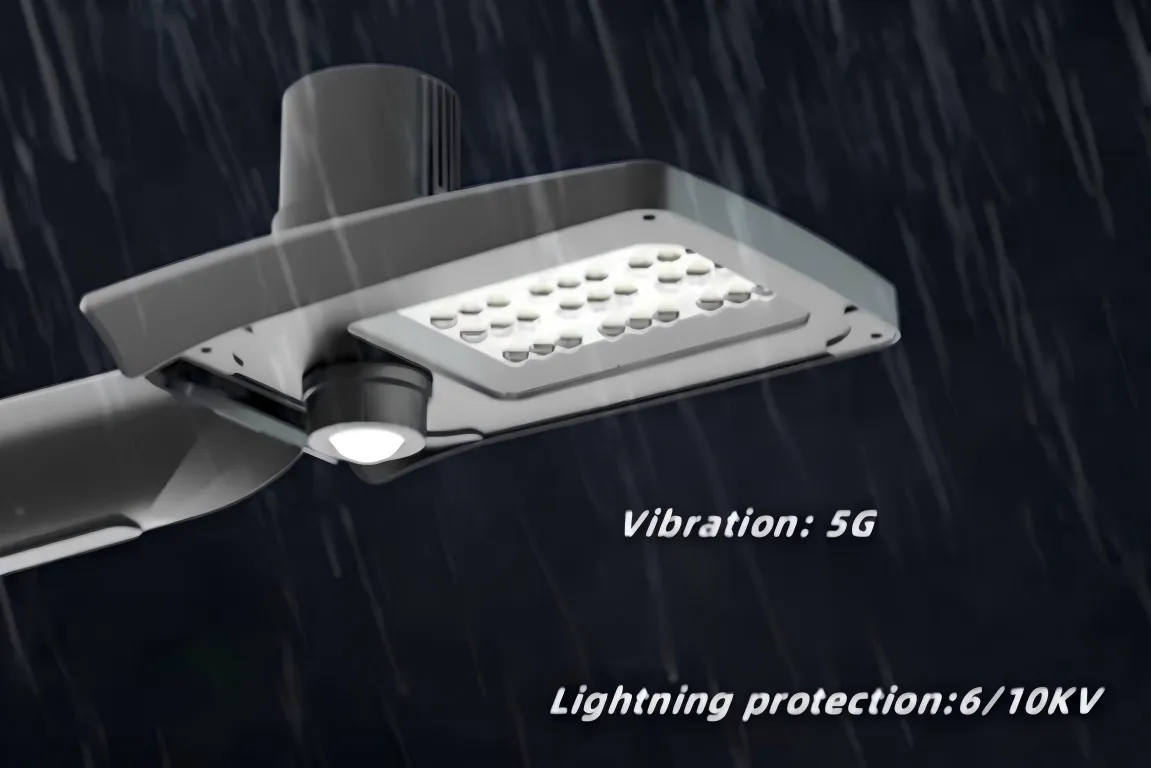
Advanced Surge Protection: High-power models support differential mode 6KV and common mode 10KV surge protection. Combined with overvoltage, short-circuit, over-temperature, and overcurrent protection, the system effectively withstands lightning surges and grid fluctuations.
Proven Reliability Testing: The entire unit passes rigorous tests including 5G vibration testing, salt spray testing, and UV resistance testing. It maintains stable performance even in extreme environments such as coastal high-salinity areas, high-altitude regions with strong UV exposure, and thunderstorm-prone zones.

5. Easy Upgrade for Existing Street Lights
Upgrading traditional street lights with built-in power supplies to smart lighting systems typically requires replacing the entire luminaire. This results in high costs, long construction cycles, and unnecessary waste of existing fixtures.
External integrated power supplies solve this problem with a standardized interface design. Existing street lights can be upgraded to smart systems without replacing the entire fixture-simply swap in a power unit with the required functions to enable features such as light sensing, dimming, and wireless programming.
This approach reduces upgrade costs to a fraction of full luminaire replacement, shortens project timelines, and minimizes disruption to road traffic-making it especially suitable for retrofit projects in developed urban areas.
6. Wide Voltage Compatibility for Global Projects
The system supports a wide input voltage range of 100–277Vac and adopts dual-stage PFC (Power Factor Correction) technology, ensuring a high power factor and strong grid adaptability.
It is compatible with various voltage standards across different countries and regions, making it particularly suitable for export projects and international engineering applications-without the need to customize different power supply versions for each market.
Traditional Built-in Power Supplyvs. External Power Supply for Street Lights
To better illustrate the differences, here is a comparison across seven key dimensions:
| products |
 |
 |
|
Comparison Dimension |
Traditional Built-in Power Supply |
External Integrated Power Supply |
|
Unified Interface |
Different sizes, poor compatibility |
Standardized interface across all models |
|
Programming Method |
Requires wiring and power-on operation |
NFC wireless programming, no wiring or power needed |
|
Smart Light Control |
Requires external photocell, adds cost |
Built-in light sensing, integrated design |
|
Maintenance Convenience |
Complex, requires professional tools |
Plug-and-play design, easy replacement |
|
Hardware Cost |
Larger fixture, higher material and tooling cost |
No driver compartment needed, reduced material and mold cost |
|
Upgrade Flexibility |
Requires full fixture replacement |
Upgrade by replacing the power unit only |
|
Storage & Transport |
Larger size, higher logistics cost |
Compact design reduces packaging and shipping cost |
In Which Scenarios Do External Power Supplies Deliver the Greatest Advantages?
The value of external integrated power supplies is not identical across all applications. The following scenarios are where their advantages are most fully realized:
1.Large-Scale Municipal Roads and Industrial Park Projects
For projects involving bulk deployment, external power solutions offer better hardware cost efficiency. The standardized interface and unified commissioning method significantly reduce long-term operation and maintenance complexity, making them ideal for large-scale, standardized installations.
2.Smart Retrofit Projects for Existing Roadways
There is no need to replace the entire luminaire. Simply upgrading the power unit enables smart functions such as light sensing, dimming, and wireless programming. This approach minimizes retrofit costs, shortens construction time, and reduces disruption to urban traffic-making it a highly cost-effective solution for upgrading older city infrastructure.
3.Harsh Environment Regions (Coastal, High Altitude, High Lightning Frequency)
With high-level protection against water, lightning, salt spray, and UV exposure, external power supplies significantly extend the service life of luminaires in extreme environments while reducing failure rates.
4.Rural and Remote Areas with Limited Maintenance Resources
The plug-and-play replacement design and wireless parameter configuration reduce the need for highly skilled technicians. Basic maintenance and adjustments can be handled by general personnel, lowering operational barriers.
5.Cross-Border Export Lighting Projects
Wide voltage compatibility supports global power grids, while the compact luminaire design reduces international logistics costs. The standardized system also allows flexible customization to meet the needs of different markets.
Conclusion
External Power Supplies for Street Lights are not merely a relocation of the driver unit-they represent a dual innovation in structural design and functional integration for roadway lighting systems. By addressing the real pain points of contractors, maintenance teams, and project owners, they deliver three core values: improved maintenance efficiency, optimized costs, and flexible upgrade capability-without compromising reliability or performance.
Yahua Lighting provides complete solutions for mains-powered street lights with external integrated drivers. Covering a wide range of power ratings, our products combine industrial-grade protection with intelligent control features, fully meeting the construction and upgrade needs of various outdoor road lighting projects.
FAQ
Q1: Is IP67 necessary for street lighting?
For outdoor applications exposed to rain and dust, IP67 ensures long-term reliability and reduces failure rates.
Q2: How does NFC programming benefit large projects?
It eliminates wiring and power-on requirements, allowing faster batch configuration and lower labor costs.
Q3: Are external power supplies suitable for export markets?
Yes. With 100–277V compatibility and compact design, they are ideal for global projects.