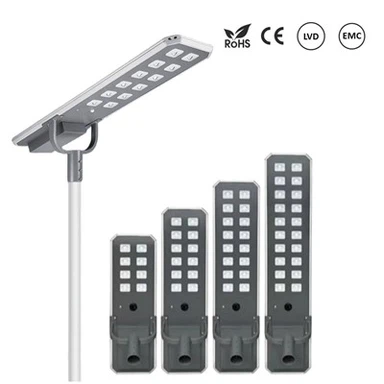

What Is the Working Mechanism of Street Lights?
Oct 25, 2023
1. Introduction of street lights
Street lights are an essential part of modern society, providing illumination for roads, sidewalks, and public spaces. They play a crucial role in ensuring the safety and security of pedestrians and drivers alike, especially during nighttime hours. But have you ever wondered how these ubiquitous fixtures work? In this blog, we will explore the working mechanism of street lights.
2. Components of a street light
A typical street light consists of several components, including a bulb or lamp, a ballast, a photocell, and a pole with a fixture. The bulb or lamp is the source of light, while the ballast regulates the electrical current to the bulb.
The photocell detects changes in ambient light levels and turns the street light on and off accordingly. The pole and fixture hold everything together and provide support for the bulb.

3. Working mechanism of a street light
When the sun sets and the ambient light level drops below a certain threshold, the photocell senses the change and sends a signal to the ballast. The ballast then sends an electrical current to the bulb, which produces light.
Conversely, when the sun rises and the ambient light level increases, the photocell sends another signal to the ballast, which turns off the current to the bulb, thereby shutting off the street light.
4. Types of street lights
There are several types of streetlights available today, each with its own advantages and disadvantages. High-pressure sodium (HPS) lights are the most common type, known for their efficiency and long lifespan.
Light-emitting diode (LED) lights are becoming increasingly popular due to their energy efficiency and low maintenance requirements. Metal halide (MH) lights are also used in some areas, but they are less efficient than HPS or LED lights.


5. Maintenance of street lights
Proper maintenance of street lights is essential to ensure their longevity and functionality. This includes cleaning and replacing bulbs as needed, checking and repairing electrical components, and inspecting and maintaining poles and fixtures.
Regular maintenance can help prevent accidents and ensure that the street lights continue to provide safe and reliable illumination.
6. Conclusion
In conclusion, streetlights are an integral part of our modern infrastructure, providing safety and security for pedestrians and drivers alike. Understanding the working mechanism of streetlights can help us appreciate their importance and better maintain them for optimal performance. By keeping our street lights in good condition, we can help ensure a brighter and safer future for all.
References:
1. HowStuffWorks - How Streetlights Work: https://home.howstuffworks.com/streetlight.htm
2. Energy.gov - How do Streetlights Work: https://www.energy.gov/articles/how-do-streetlights-work
3. LEDLightExpert.com - How Do Street Lights Work: https://www.ledlightexpert.com/How-Do-Street-Lights-Work_ep_47.html
4. Philips Lighting - How do streetlights work: https://www.lighting.philips.com/main/education/connect/how-do-streetlights-work
5. Engineering Insider - How Street Lights Work: A Comprehensive Guide: https://engineeringinsider.org/how-street-lights-work-a-comprehensive-guide/