
How Industrial Automation Enables Precise Control of Solar Street Lights?
Oct 10, 2025
With industrial automation, solar street lights are no longer just basic lighting tools. They have evolved into intelligent nodes capable of precise sensing and smart decision-making. These systems deliver stable, efficient, and user-friendly lighting across different environments. This article explores three key ways industrial automation achieves precise control of solar street lights.

1. Urban Main Roads: Centralized Control of Solar Street Lights, Stable Performance
On urban main roads, solar street lighting systems face large-scale deployment, high brightness demands, and strict stability requirements. Industrial automation helps achieve smarter and more systematic centralized control.
Smart time control and adaptive dimming greatly improve energy efficiency. The system automatically adjusts brightness at different times-brighter during evening rush hours and dimmer late at night-based on preset or dynamically calculated strategies. It meets traffic lighting needs while conserving energy.
With integrated sensors, the system can detect the presence of vehicles and pedestrians and switch between high-brightness and energy-saving modes, providing true "lighting on demand."

Coordinated response among multiple lights enhances reliability and emergency performance. When a fault, battery issue, or communication error occurs, the master controller identifies the affected node and activates an emergency lighting plan or backup power. This ensures continuous illumination on key roads.
Built-in uninterruptible power supply (UPS) modules and dual power switching between solar and grid sources further improve system stability during extreme weather.
Data analysis and maintenance optimization rely on a cloud-based platform. Historical data is collected and analyzed to support fault prediction, battery life assessment, and lighting strategy adjustments. Maintenance teams can quickly locate problem areas and issue remote commands, shifting from "reactive repairs" to "proactive maintenance."
2. Scenic Areas: Smart Sensing of Solar Street Lights for a Comfortable Experience
In scenic areas and parks, where environments are complex and lighting needs vary, adaptive control is key to upgrading solar street lights with true intelligence.
By integrating light, temperature-humidity, and infrared motion sensors, the system collects real-time environmental data to achieve smart, perception-based lighting control. When natural light is low or weather conditions suddenly change, the system delays light-off automatically.
As daylight returns in the morning, it turns lights off precisely, ensuring accurate timing and avoiding energy waste. Based on historical weather models, it can also adjust lighting schedules throughout the year-achieving fully automatic, unattended operation.
Zoned dimming and dynamic power adjustment allow customized brightness settings for different areas. During peak hours, main paths remain bright while side areas dim down. When no one is around at night, the system switches to low-power mode, extending battery life. The control unit can even fine-tune output automatically based on actual power consumption to keep battery discharge within the optimal range.

Adaptive lighting also focuses on enhancing visitor experience and landscape ambiance. Built-in modes such as scheduled, festive, and scenario lighting let the system create different atmospheres. During holidays, it can enter a "decorative lighting mode," using special color temperatures and rhythmic brightness to create a festive feel.
When the crowd thins at night, it switches to a "quiet mode," delivering soft, pleasant light for a safe and relaxing nighttime environment. Some systems even allow local interaction through apps, voice control, or central panels-making the lighting experience more engaging and comfortable for visitors.
3. Rural and Remote Areas: Independent Operation of Solar Street Lights, Long-Lasting Performance
In rural and remote regions, where power infrastructure is weak and maintenance resources are limited, solar street lights must be highly stable, self-sufficient, and energy-efficient.
Industrial automation technology makes this possible through embedded control, low-power design, and locally adaptive strategies-creating intelligent lighting systems that operate reliably without human supervision.
Low-power embedded microcontrollers serve as the system's core control unit. Using localized algorithms, they independently manage lighting based on sunlight, battery levels, and time.
With built-in sunrise/sunset models, discharge strategies, and backup logic, the system can automatically handle lighting schedules, energy allocation, and fault protection-even without internet connectivity. It also stores local operation logs and fault records, allowing easy data collection and maintenance tracking on-site.

In terms of energy management, the system features dynamic energy regulation. It adjusts lighting duration and brightness according to battery charge, discharge history, and sunlight trends. During long periods of rain, it enters 'energy-saving mode,' maintaining only low-level safety lighting. In sunny seasons, it switches to "high-brightness mode" for better illumination. These adaptive strategies greatly improve battery efficiency and system endurance-especially valuable in areas where battery replacement is difficult.
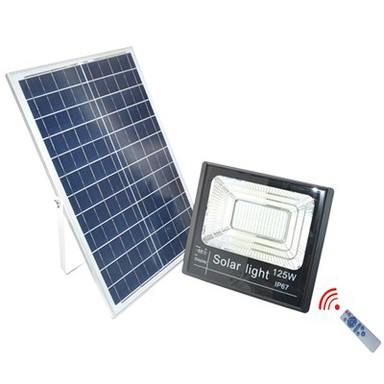
The modular design integrates the solar panel, battery, lamp, and control unit into one compact system, forming a true "plug-and-play" lighting solution. This makes large-scale deployment and replacement simple, reducing construction time and labor costs. Some models even include Bluetooth or near-field communication (NFC), enabling technicians to configure settings and retrieve data via smartphone-useful in regions without mobile signal coverage.
The low-power, standalone operation model-supported by local control, smart energy management, and modular design-creates a reliable, adaptable, and easy-to-maintain lighting solution. It significantly improves nighttime safety and mobility in remote areas, while advancing the intelligent upgrade of rural infrastructure.
Conclusion
The integration of sensors and automation has transformed solar street lights from simple lighting devices into essential components of smart cities and modern villages. They not only illuminate the night but also save energy, reduce costs, and make public lighting more intelligent, efficient, and human-centered.