
Street Light Retrofit: High Cost but Low Savings?
Jun 15, 2026
Amid the global push for low-carbon development and urban renewal, energy-efficient street lighting has become a key priority in municipal projects. This article outlines Street Light Retrofits by lighting type and offers decision-making methods for engineering projects. It provides strong, hands-on guidance for municipal retrofits involving LED street lights and solar street lights.

2. Road Classification: Identify which type of energy consumption issue each road segment falls into.
3. Solution Matching: Determine the most suitable retrofit approach based on site conditions, construction feasibility, and budget.
4. Phased Implementation: Prioritize road sections with the highest potential for energy savings and carbon reduction.
5. Performance Verification: After implementation, monitor energy consumption, lighting performance, and carbon emission data.
6. Optimization & Adjustment: Fine-tune system parameters based on real operational data to continuously improve energy efficiency.
Street Light Retrofits: No Longer Just About Replacing Lamps or Cutting Power
In the past, road lighting upgrades followed a very simple approach: either install brighter fixtures, or reduce wattage and shorten operating hours. While these methods can lower electricity consumption to some extent, they often create new problems.Each road section differs in construction timeline, pole layout, fixture configuration, power rating, and usage patterns. A one-size-fits-all retrofit strategy rarely works across all scenarios. As a result, projects may deliver poor performance, lead to repeated investments, and cause unnecessary resource waste.
Why High Energy Use and Carbon Emissions Still Persist? The root causes of excessive energy consumption and high carbon emissions vary by location:
- Some roads have overly dense lamp spacing
- Others use fixtures with unnecessarily high wattage
- In certain areas, the lighting itself is adequate-but lights still run at full power even when there are no pedestrians or vehicles at night
Four Types of Urban Street Lighting Issues
Based on field measurements across multiple urban branch roads and secondary arterials-analyzing pole height, spacing, fixture wattage, and carbon emissions-existing street lighting systems can be categorized into four types. These categories cover nearly all municipal retrofit scenarios:1. High Power Density RoadsCore Issue: Lamps are installed too densely, resulting in an excessive overall lighting load, high energy consumption per unit area, and elevated carbon emissions.Root Cause: The problem lies in the overall lighting layout, not in individual fixtures.
2. High Single-Fixture Load RoadsCore Issue: The pole layout is reasonable, but outdated fixtures consume too much power per unit.Root Cause: Each individual lamp has high wattage and is the main source of energy consumption.
3. Operational Redundancy RoadsCore Issue: Both lighting design and fixture parameters meet standards, but the system operates on a fixed on/off schedule.Root Cause: Even during late-night hours with minimal traffic or pedestrian activity, lights continue running at full power, leading to significant wasted energy.
4. Structurally Optimized RoadsCore Issue: The overall configuration is already compliant and energy-efficient.Implication: Large-scale retrofitting is unnecessary and would only increase costs without delivering meaningful energy savings.
Targeted Street Light Retrofits Solutions for Different Road Types
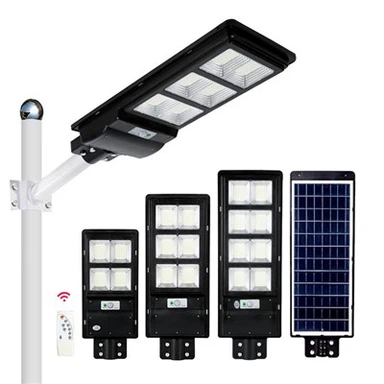
For the four categories above, we recommend simple and highly effective upgrade strategies that are fully applicable to municipal projects and street lighting renovations:1. High Power Density RoadsInstead of simply replacing fixtures, the priority should be to optimize the overall layout-such as adjusting pole spacing and lighting angles. At the same time, integrate a smart lighting control system to enable on-demand dimming. High-efficiency LED street lights can be used to reduce the number of fixtures while lowering total energy consumption. For suburban or rural roads, switching directly to solar street lights can eliminate grid dependency and reduce carbon emissions at the source.
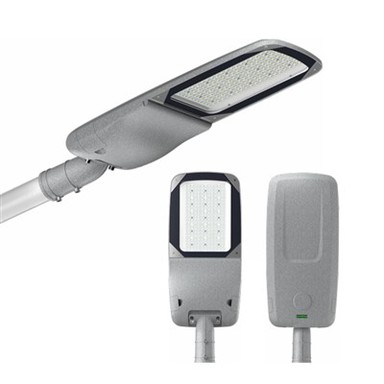
2. High Single-Fixture Load RoadsNo changes to the road layout are required. The key is to replace traditional high-energy-consuming fixtures with next-generation energy-efficient LED street lights, along with optimized electrical parameters. This solution features simple installation, short project timelines, and low retrofit costs, making it the mainstream approach for upgrading outdated street lighting systems worldwide.
3. Operational Redundancy RoadsThere is no need to replace existing fixtures. The focus should be on upgrading the control system. By adding time-based dimming, motion sensing, and remote management systems, lighting levels can be automatically adjusted based on time periods and traffic flow. Solar street lights, with built-in light control, timing functions, and energy storage, are naturally suited for this scenario and can significantly reduce unnecessary energy consumption.
4. Structurally Optimized RoadsNo large-scale retrofitting is required for these roads. The existing configuration should be maintained. Routine inspections, timely replacement of aging components, and the use of durable, stable LED fixtures are sufficient to ensure long-term energy-efficient operation.
Standardized Engineering Workflow
The following is a complete, closed-loop retrofit process applicable to all municipal and EPC street lighting projects. The steps are straightforward and practical:1. Data Audit: Collect and analyze key data, including lamp wattage, pole layout, operating hours, and overall energy consumption.
2. Road Classification: Identify which type of energy consumption issue each road segment falls into.
3. Solution Matching: Determine the most suitable retrofit approach based on site conditions, construction feasibility, and budget.
4. Phased Implementation: Prioritize road sections with the highest potential for energy savings and carbon reduction.
5. Performance Verification: After implementation, monitor energy consumption, lighting performance, and carbon emission data.
6. Optimization & Adjustment: Fine-tune system parameters based on real operational data to continuously improve energy efficiency.
Conclusion
Urban Street Light Retrofits are no longer driven by experience alone-they are now based on precise, data-driven solutions tailored to actual road conditions. As core energy-saving technologies, LED street lights and solar street lights can adapt to all retrofit scenarios and meet global municipal standards for low-carbon and energy-efficient development.
Yahua Lighting specializes in exporting high-quality LED lighting and solar street lighting products. Backed by this mature classification-based retrofit methodology, we provide a one-stop solution-from on-site condition analysis and product selection to smart control integration and overall project design-fully supporting various urban road lighting upgrade projects worldwide.
For project procurement or engineering collaboration, feel free to get in touch.