
What Is a High Bay Light and How Is It Different From a Low Bay Light?
Jul 25, 2025
High bay lights are commonly the powerful fixtures that illuminate vast spaces such as large warehouses, walk-in cold storage units, and modern manufacturing facilities-mounted high above on towering ceilings. This article will explain what high bay light is, its advantages and selection tips, and how it differs from low bay lighting.
1. What Is a High Bay Light?
High bay luminaires are the most common and essential type within the industrial lighting category. They are lighting fixtures specifically designed for tall indoor spaces, typically installed at heights of 20 feet (6 meters) or more. These fixtures use high-power light sources-most commonly LED-combined with specialized optics to direct light precisely down to the work area, overcoming light loss due to height and ensuring consistent and sufficient brightness on the ground.

2. Key Advantages of High Bay Lighting
- Powerful Illumination & High Efficiency: With high lumen output and the use of reflectors or lenses, High bay luminaires effectively eliminate dark spots and meet strict lighting standards for operations like warehousing and precision manufacturing.
- Significant Energy Savings: Modern LED High bay luminaires can save 50%–80% more energy compared to traditional metal halide or high-pressure sodium lamps, drastically reducing electricity bills.
- Long Lifespan & Low Maintenance: LED high bay lights typically last over 50,000 hours, minimizing replacement frequency and maintenance costs-especially important in hard-to-reach high-ceiling areas.
- Superior Light Quality: High Color Rendering Index (CRI) options ensure accurate color visibility, reduce visual fatigue, and improve workplace safety and comfort.
- Durable & Built to Last: With high protection ratings like IP65, these lights resist dust, humidity, and even high-pressure washing-making them suitable for cold storage, workshops, and other harsh environments.
- Smart Control Compatible: Easily integrates with sensors (motion, daylight) and smart lighting systems for demand-based lighting and further energy optimization.
3. How to Choose the Right High Bay Light?
3.1 Understand Your Space: Ceiling Height & Lighting Needs
Ceiling Height Guides the Output:
10–15 ft → ~10,000–15,000 lumens
15–20 ft → ~16,000–20,000 lumens
25–35 ft → ~33,000 lumens or more
These ranges help you match the output needed for your vertical space
Spacing Rules:
Fixture spacing should roughly equal mounting height-e.g. 15 ft spacing at 15 ft height, 20–25 ft spacing at 30 ft
3.2 Choose the Fixture Type: UFO (Round) vs. Linear
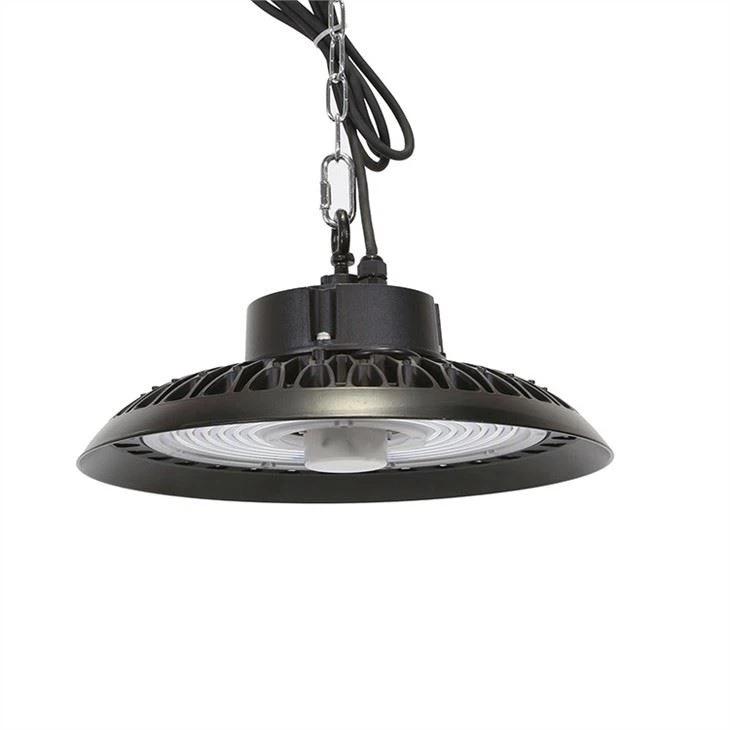
Round/UFO High Bays: Compact, easy to hang (hook‑mount), with ~120° beam angle ideal for open spans and taller ceilings
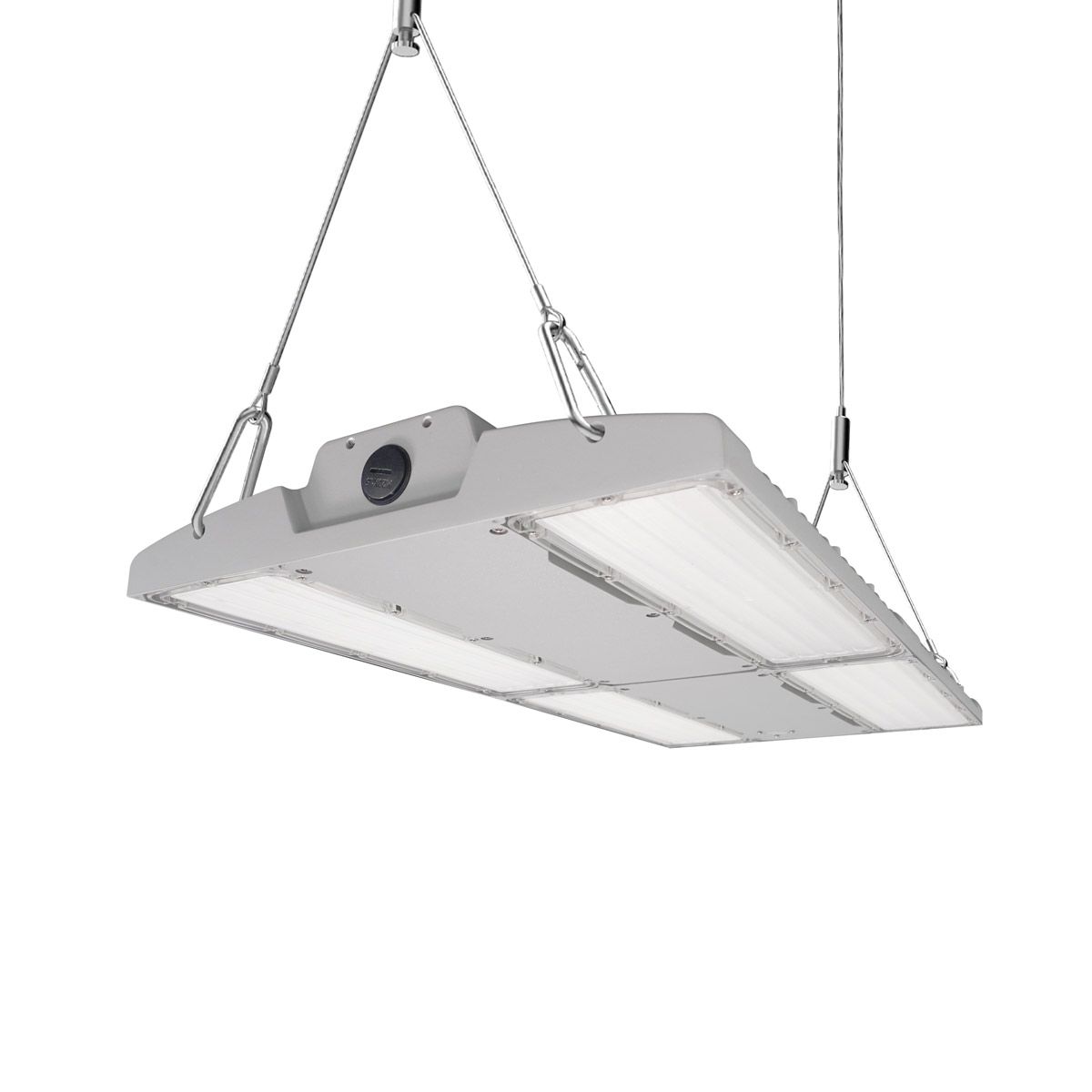
Linear High Bays: Rectangular fixtures suited to aisle lighting or long, narrow spaces-typically surface or pendant mounted
Linear and Round/UFO High Bays

3.3 Optimize Light Output & Energy Efficiency
Lumen Requirement: Industrial and warehouse spaces typically require 15,000–40,000 lumens, scaled by ceiling height and tasks
Efficiency (Lumens per Watt): Choose fixtures delivering at least 130 lm/W-premium models can reach 150–160 lm/W
3.4 Color Temperature & Color Rendering Index (CRI)
Color Temperature:
- 5000K–6500K (cool white) for industrial or alert task lighting
- 4000K (neutral white) for retail and general workspaces
- CRI: Aim for CRI 80+ for accurate color. For precision tasks or quality control, CRI ≥ 90 may be desirable-but less common and more costly
3.5 Beam Angle & Light Distribution
- Wide Beams (120°+) are best for general, broad illumination
- Narrow Beams (60°–90°) focus light downward for high tasks or aisle lighting
- Customize beam angle to your layout to avoid shadows and ensure even coverage

3.6 Durability, IP Rating & Thermal Considerations
- IP Rating: Choose IP65 or higher for dusty or damp environments to protect internal components
- Thermal Design: Prefer fixtures with heat‑sink design or airflow compatibility-heat shorten LED lifespan
- IK Impact Rating: Useful where equipment may strike fixtures.
3.7 Controls, Dimming, Sensors & Smart Features
- Smart Controls: Occupancy sensors, daylight harvesting, and dimmable drivers can save up to 60% in energy use, especially in large facilities
- Flexibility: Look for wattage‑selectable or CCT‑selectable fixtures for adaptability
3.8 Lifespan, Warranty & Maintenance
- Lifespan: High-end LED high bays often rate for 50,000–100,000 hours, reducing replace frequency
- Warranty: Choose fixtures with at least a 5‑year warranty; Yahua Lighting's products often include this level of support
3.9 Installation & Layout Planning
- Mounting Options: Hook mounts for UFOs, suspension or surface for linear fixtures
- Cross‑Crossover Layouts: Light from multiple directions (≥3 fixtures overlapping) helps reduce shadows and improve uniformity
- Weight & Wiring: Consider fixture weight, wiring convenience, and whether plug‑and‑play designs are available.

4. What's the Difference Between High Bay Lights and Low Bay Lights?
The core difference between High bay luminaires and low bay lights lies in their intended installation height and the type of space they are designed for.
|
Feature |
High Bay Luminaires |
Low Bay Light |
|
Target Mounting Height |
Typically ≥ 6 meters (20 feet) |
Typically 4–6 meters (12–20 feet) |
|
Applicable Spaces |
Large spaces with very high ceilings (warehouses, manufacturing plants, aircraft hangars, large gymnasiums) |
Medium-height ceiling spaces (retail stores, small gyms, conference rooms, low-ceiling workshops) |
|
Luminaire Power |
Higher (LED ≥100W common) |
Moderate (LED usually <150W) |
|
Optical Design |
Critical! Narrow-to-medium beam angles; focused downward projection. Lenses or precision reflectors concentrate light to overcome height attenuation. |
Medium-to-wide beam angles. Prioritizes diffuse, uniform light distribution at lower heights with glare control. Reflectors or diffusers typical. |
|
Light Distribution |
Concentrated downward projection, superior vertical penetration, higher center intensity. |
Broader, uniform spread; wider coverage angle minimizes shadows at medium heights. |
|
Physical Profile |
Generally deeper/longer to accommodate powerful light sources and complex optics. |
Typically compact and low-profile for aesthetic integration. |
High-quality LED high bay lights delivers long-term value through substantial energy savings, lower maintenance costs, and enhanced lighting performance. With superior brightness and color rendering, it improves workplace safety, boosts productivity, and fosters a more comfortable and efficient working environment.
Yahua Lighting specialize in advanced industrial lighting solutions. Our expert team offers free lighting layout designs and ROI analyses to ensure you choose the most cost-effective and sustainable option. Investing in the right LED high bay lighting is more than a purchase-it's a smart step toward greater operational efficiency and a brighter, more productive future.


