
Application of Smart Streetlights in Urban Road Lighting
Aug 07, 2026
Smart streetlights integrate energy-saving LED light sources, IoT sensing devices, and intelligent control technologies. They can automatically adjust lighting brightness and be remotely controlled. Based on intelligent dimming technology, these streetlights automatically regulate brightness according to operating time and road traffic volume, thereby saving energy and reducing consumption.
Intelligent lights use IoT technology to enable real-time monitoring and automatic fault alarms, shortening the time required to detect and repair faults and improving the operating efficiency and stability of the lighting system. In addition, smart lights are scalable. They can serve as sensing nodes in smart cities and integrate various functional modules. They not only meet the lighting needs of urban roads, but also provide data support for traffic management, public security monitoring, meteorological monitoring, government services, and other functions.
1. System Composition of Smart Streetlights
The hardware system is the basic carrier for implementing various functions, and its overall structure is modular and integrated. It mainly consists of five core components: the light source module, sensor module, communication module, control module, and power supply module.
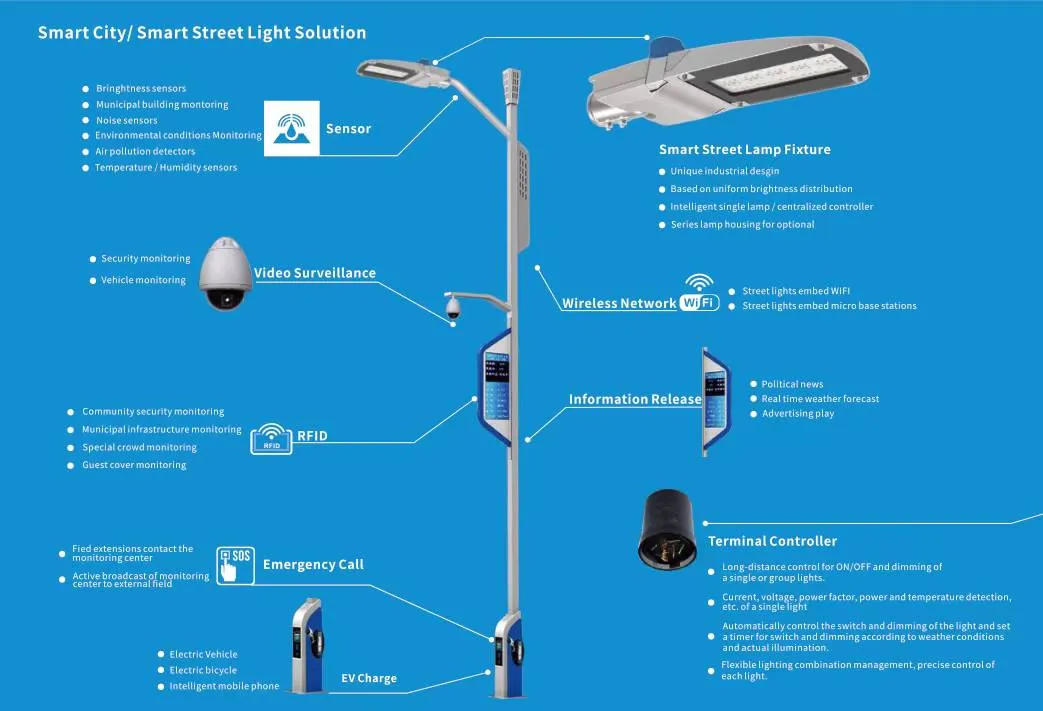
- The light source module uses LED light source components with high luminous efficiency and long service life. It directly undertakes the core task of road lighting and can provide stable output according to the brightness requirements of different road sections.
- The sensor module integrates various devices, such as traffic flow monitoring, meteorological monitoring, and environmental monitoring equipment, and can collect environmental parameters such as road traffic volume, temperature and humidity, and air quality in real time.
- The communication module is responsible for data transmission. It sends all types of information collected by sensors to the control center in real time and receives control commands from the control center.
- The control module is the core of the entire hardware system. It connects and coordinates the work of all modules and completes corresponding operations according to preset programs and instructions. The power supply module mainly uses municipal power, supplemented by new energy sources, to provide power for all modules.
2. Functions of the Smart Streetlight Software System
The smart streetlight software control system is built around practicality, intelligence, and compatibility. It is the key to ensuring the efficient operation of the hardware system. It mainly consists of four core layers: the data collection layer, data analysis layer, instruction execution layer, and user interaction layer.
- The core function of the data collection layer is to collect data from the sensing modules in the hardware system in real time. It collects data such as lighting status, road traffic flow, and environmental parameters at a set frequency to ensure data timeliness.
- The data analysis layer deeply processes the data collected by the collection layer and uses the constructed operating model to determine the current operating status of the lighting system. It also automatically generates dimming plans based on changes in traffic flow, analyzes equipment operation data, identifies potential faults in a timely manner, and issues early warnings.
- The instruction execution layer converts the plans and instructions generated by the data analysis layer into specific operations. It directly sends commands such as dimming and switching lights on to the control module of the hardware system, thereby reporting and locating fault information.
- The user interaction layer provides staff with a visual operation interface. Staff can use computers, mobile terminals, and other terminal devices to view the operating status of each road section's streetlights, manually issue control commands, and adjust system operating parameters according to actual needs.
3. Functions of Smart Streetlights
The core lighting functions of the lights are demand-based lighting and stable lighting. The entire process requires no human intervention and is completed automatically by the control system. During daily operation, the control system automatically turns streetlights on and off based on preset time points and data from light sensors, ensuring that streetlights are switched on and off on schedule at night. For road sections with large changes in traffic flow, the system uses traffic flow monitoring devices to collect traffic volume data in real time. During peak hours, it automatically adjusts streetlight brightness to the standard value to ensure clear road visibility. When traffic volume is low or during off-peak periods, it automatically dims the lights to achieve energy savings.
The system monitors the operating status of streetlights in real time. When faults such as abnormal brightness or power outages occur, it immediately identifies the fault point and sends the information to the terminal devices of maintenance personnel. Maintenance personnel can then go directly to the site for repairs based on the provided fault location, shortening fault handling time and improving the stability and continuity of urban road lighting.
4. Application Scenarios of Smart Streetlights in Urban Road Lighting
Energy-Saving Applications on Arterial Roads
Arterial roads are the main arteries of urban traffic, with heavy traffic flow and long operating hours. Smart lights have clear advantages in this scenario. They can adopt time-based and light-sensing dimming schemes according to traffic flow patterns. During morning and evening peak hours, the system automatically adjusts streetlight brightness to 100% to ensure driving safety. During normal traffic periods, it adjusts brightness to 70%–80% according to real-time changes in traffic flow. During low-traffic periods from late night to early morning, traffic volume drops significantly, and the system automatically reduces lighting brightness to 50% to meet the basic lighting needs of a small number of vehicles.
When natural light is insufficient, such as on cloudy or rainy days, smart lights work together with light sensors to turn on or brighten automatically in advance. When natural light is sufficient on sunny days, the system appropriately delays activation to reduce power consumption. This dimming scheme consumes more than 40% less energy than traditional streetlights. It also has a real-time fault monitoring function, which can quickly locate faulty streetlights and shorten maintenance time.

Intelligent Applications on Secondary Roads and Branch Roads
Traffic flow on secondary roads has tidal characteristics, with significant differences among different road sections. The intelligent control technology of smart streetlights can adapt to these characteristics. For secondary roads and branch roads near residential areas, the system makes corresponding adjustments according to residents' travel patterns, maintaining relatively high brightness in the evening. To prevent strong light from affecting residents' rest, the lights are automatically dimmed after 23:00. On secondary roads around commercial districts, brightness is adjusted according to the business hours of the commercial area. When the commercial district closes, the lighting brightness is gradually reduced and the lighting duration is shortened.
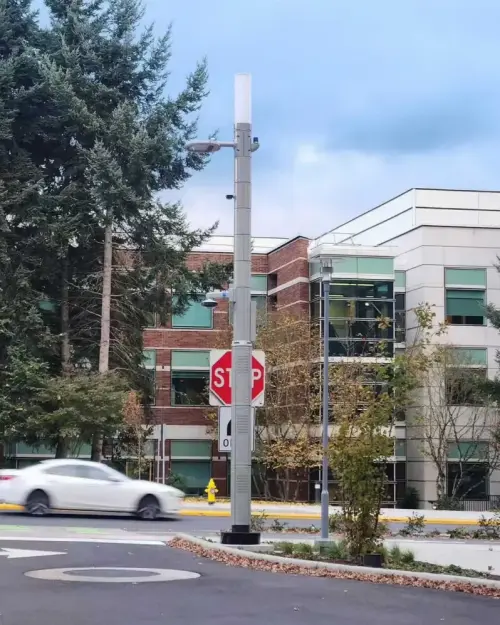
For branch roads near schools and hospitals, the system automatically increases lighting brightness during commuting peak hours to ensure pedestrian safety. Smart streetlights installed on secondary roads and branch roads also have a one-touch adjustment function. In the event of emergencies such as temporary traffic control or emergency rescue, terminal devices can be used to remotely control streetlights on designated road sections, ensuring the smooth progress of emergency rescue work.