
How Efficient Are Solar Panels?
Jan 09, 2026
From residential solar systems and street lighting to large-scale power plants-and from crystalline silicon to thin-film technologies-the photoelectric conversion efficiency of solar panels varies significantly by type and application. Drawing on industry data and technological developments, this article provides a clear overview of typical solar panels' efficiency levels today and how they perform in real-world scenarios.
1. Photoelectric Conversion Efficiency by Types of Solar Panels
1.1 Monocrystalline Silicon PV Panels
Monocrystalline silicon PV panels typically achieve conversion efficiencies of around 18%. In laboratory settings and in high-end commercial products, efficiency can reach up to 24%, making monocrystalline silicon one of the most efficient solar technologies currently available. However, this performance comes with a relatively higher production cost.
Thanks to encapsulation with tempered glass and waterproof resin, these panels offer excellent mechanical strength and weather resistance, with a typical service life of around 25 years. Visually, monocrystalline cells are characterized by their rounded corners (as shown below), which is also a key feature that distinguishes them from polycrystalline silicon cells.

1.2 Polycrystalline Silicon PV Panels
Polycrystalline silicon PV panels are manufactured using processes similar to those of monocrystalline panels, but they offer a lower photoelectric conversion efficiency, typically in the range of 16%–18%. From a cost perspective, polycrystalline panels benefit from a simpler manufacturing process, higher silicon material utilization, and lower energy consumption, which historically made them more economical to produce and led to widespread adoption.
However, when efficiency and cost are considered together, monocrystalline panels generally deliver a better overall performance-to-price ratio. In terms of appearance, polycrystalline cells have a square shape with sharp right-angle corners, which clearly distinguishes them from the rounded-corner design of monocrystalline cells and allows for easy visual identification (as shown below).

1.3 Thin-Film Solar Panels
Represented by amorphous silicon (a-Si) solar cells, thin-film solar technology has followed a development path fundamentally different from that of crystalline silicon cells since its introduction in 1976. Its key advantages include a simplified manufacturing process, low silicon consumption, and reduced energy use during production. One notable benefit of this technology is its ability to generate electricity under low-light conditions, where performance losses are less pronounced than with crystalline silicon cells.
However, amorphous silicon solar cells still suffer from relatively low conversion efficiency, with the current international advanced level at around 10%. In addition, their efficiency tends to degrade significantly over time, resulting in lower long-term stability compared with crystalline silicon PV panels.

2. Key Factors Affecting Solar Panels' Conversion Efficiency
2.1 Material Properties
Materials form the foundation of photoelectric conversion, and their structural purity directly determines the upper limit of efficiency. In crystalline silicon cells, monocrystalline silicon features a highly ordered atomic structure with minimal defects, allowing electrons to move more freely and resulting in the highest efficiency. Polycrystalline silicon, by contrast, contains grain boundaries that act as defect sites, increasing electron recombination and reducing overall efficiency.
Thin-film technologies (such as CIGS) rely heavily on precise elemental composition and material purity. Even minor deviations can alter light-absorption characteristics and introduce recombination centers, ultimately degrading conversion performance.
2.2 Manufacturing and Cell Technologies
Advanced cell technologies are designed to reduce energy losses and suppress electron recombination.
- PERC (Passivated Emitter and Rear Cell) technology reduces rear-surface recombination through backside passivation, typically improving monocrystalline cell efficiency by 1–2%.
- HJT (Heterojunction Technology) combines the advantages of amorphous silicon and crystalline silicon, enabling efficiencies of over 25%, while also offering lower degradation due to its low-temperature manufacturing process.
- MBB (Multi-Busbar) design enhances effective power generation by shortening current paths and reducing shading losses, thereby increasing the active cell area.

2.3 Environmental Conditions
Environmental factors have a direct impact on solar panels' efficiency:
- Temperature: As temperature rises, semiconductor performance declines. For crystalline silicon cells, efficiency typically decreases by about 0.45% per °C increase.
- Solar irradiance: Insufficient sunlight (such as on cloudy days) directly reduces the number of photons available to excite electrons. Partial shading can also trigger hot-spot effects, significantly reducing power output and potentially damaging the module.
- Soiling and moisture: Dust, dirt, and humidity reduce light transmittance, indirectly lowering conversion efficiency.
2.4 Operation and Maintenance Practices
The level of operation and maintenance plays a crucial role in real-world performance:
- Surface cleanliness: Dust accumulation can reduce power generation by 6–9% due to decreased light transmission.
- Tracking systems: Single-axis or dual-axis trackers maintain optimal panel orientation by following the sun, increasing annual energy yield by 15–30%.
- Routine inspections: Regular checks for encapsulation aging, loose electrical connections, and other issues help prevent unnecessary energy losses and ensure long-term system reliability.
3. How to Choose the Right Solar Panels
Choosing by panel type:
If cost-effectiveness is the top priority, polycrystalline silicon panels are a practical choice.
When installation space is limited and higher power density is required, high-efficiency monocrystalline silicon panels are more suitable.
In applications with poor lighting conditions and relatively flexible efficiency requirements, thin-film panels-known for better low-light performance-can be considered.
Choosing by conversion efficiency:
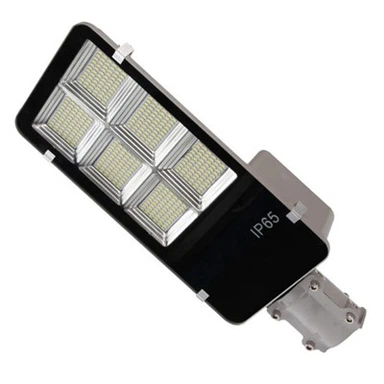
For buyers and end users, understanding efficiency ratings helps ensure more informed decisions. Taking solar street lights as an example, selection should not be based solely on lamp brightness; the actual conversion efficiency of the solar panel is equally important.

A solar street light equipped with a 24%-efficient monocrystalline panel, compared with a similar product using an 18%-efficient panel, will charge faster under the same sunlight conditions and typically deliver longer autonomy during cloudy or rainy days. Over the long term, this also translates into better overall performance and higher reliability.
When evaluating the comprehensive performance of solar street lighting systems, panel conversion efficiency is a key technical indicator. Yahua Lighting is committed to using high-efficiency and stable solar panel solutions. Our current core products are equipped with monocrystalline silicon PV panels with conversion efficiencies of up to 24%, placing them at the forefront of the industry and providing users with superior energy generation and dependable backup performance.
Conclusion
The photoelectric conversion efficiency of solar panels is a continuously evolving metric. As new technologies, advanced materials, and smarter operation and maintenance practices emerge, the upper limits of efficiency will continue to rise. When selecting PV panels, it is essential to consider efficiency, cost, service life, and application scenarios as a whole, aiming for the best overall value rather than focusing solely on peak efficiency figures.
If you have specific project requirements or would like to learn more about product configurations and performance details, Yahua Lighting can provide tailored technical solutions and verified performance data to support your decision-making.