
How to Choose Tower Crane Lights for Construction Sites?
Jan 14, 2026
Construction sites are harsh working environments, with heavy dust, strong vibration, and long operating hours. These conditions place high demands on the brightness, protection level, and durability of LED tower crane lights. Choosing the right tower crane lights not only improves construction safety and efficiency, but also helps reduce energy consumption.
1. Brightness and Luminous Efficiency of Tower Crane Lights
Construction sites usually cover large areas and contain many obstacles. Adequate lighting is essential to eliminate dark spots and blind zones. When selecting a tower crane light, do not judge by wattage alone-luminous flux (measured in lumens, lm) is far more important.
It is recommended to choose products with a luminous efficacy of at least 120 lm/W. Higher efficacy means more brightness at the same power, or lower power consumption at the same brightness.
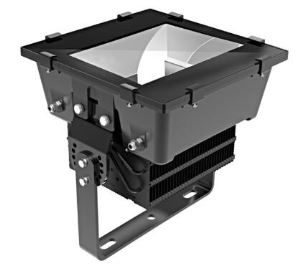
For example, Yahua Lighting LED tower crane flood lights can reach 180 lm/W, allowing either double the brightness at the same wattage, or the same brightness with only half the power.

Match the Power to Different Working Scenarios
Lighting power should be selected according to specific construction tasks and environments.
Tower crane or high-mast lighting: These applications require long-distance, wide-area floodlighting. LED tower crane lights with batwing distribution or wide beam angles (such as 120°) are recommended, as they provide uniform coverage of large working areas and effectively reduce dark zones. Color rendering is equally important-always ensure a CRI (Ra) of 80 or higher. This allows workers to clearly distinguish material colors and detect equipment defects in time, helping prevent safety risks caused by poor color rendering.
Task-focused lighting for work areas: For areas requiring precision, such as rebar processing zones or formwork installation areas, more concentrated light without shadows is essential. Lamps with medium beam angles (around 90°) or asymmetric optics are better suited, ensuring clear visibility, higher working accuracy, and improved safety.
Avoid "inflated brightness" claims: Many low-cost LED tower crane flood lights offer low real efficiency and suffer rapid lumen depreciation, losing a significant portion of their brightness after just a few months of use. Some high-quality products LED tower crane flood lights, can reach 180 lm/W and maintain very low lumen depreciation over a 50,000-hour lifespan, ensuring stable and reliable illumination throughout the entire construction period.

2. Protection Rating of Tower Crane Lights
Construction sites are constantly exposed to dust, rain, and mud, making the IP rating a critical factor that directly affects the service life of tower crane flood lights. It is essential to choose luminaires with an IP65 rating or higher.
Here, "6" indicates complete protection against dust ingress, while "5" means protection against water jets-sufficient to withstand heavy rain and dust accumulation in open-air construction environments.
For more detailed information on IP ratings, please refer to the related article: What IP Rating Do You Need for Outdoor Solar Street Lamps?
If the work area contains highly corrosive gases, such as those near chemical plants or industrial facilities, a high IP rating alone is not enough.
In such cases, lights with anti-corrosion coatings should be selected. In addition, carefully inspect the waterproof connectors and sealing gaskets to ensure they are intact, preventing moisture ingress that could cause short circuits.

3. Durability and Vibration Resistance of Tower Crane Lights
Construction machinery operates continuously on job sites, and lighting fixtures are frequently exposed to vibration. Therefore, tower crane lights must have a robust and stable structure.
For the housing, aerospace-grade aluminum alloy is preferred due to its high strength and excellent heat dissipation performance. For LED chips, well-known brands such as OSRAM and Cree are recommended, as they offer more reliable quality and consistent performance.
The power supply should ideally use an automotive-grade driver, which is more resistant to harsh environments and helps reduce maintenance and replacement costs over time.
In addition, the mounting structure is just as important. Priority should be given to lights with snap-fit mounting or reinforced suspension chains/brackets, ensuring the fixture remains securely in place and will not fall off even under continuous vibration.

4. Thermal Management and Safety Performance of Tower Crane Lights
LED lights generate heat during operation, which directly affects both luminous efficiency and service life. The long, continuous operating hours typical of construction sites place even higher demands on thermal management. When selecting tower crane flood lights, pay close attention to whether the fixture features large-area heat sinks and a separate driver design. This design allows the driver to dissipate heat independently, preventing heat buildup from overlapping with the LED chips.
In terms of safety, the light must comply with relevant national standards and include an anti-glare design to prevent excessive brightness from interfering with construction work. Electric shock protection is also essential (Class I luminaires must be properly grounded).
Ideally, the driver should also provide overvoltage, overcurrent, and surge/lightning protection, enabling the light to adapt to the unstable and complex power conditions commonly found on construction sites.

5. Compatibility and Cost-Effectiveness
Choose the appropriate mounting method based on the installation scenario. Tower crane tops are best equipped with suspended lights featuring 360° adjustable angles. For walls or steel structures, wall-mounted fixtures are more suitable, while in confined or narrow spaces, ceiling-mounted lights are often the best option.
At the same time, ensure the input voltage matches the power supply commonly used on construction sites-380V three-phase power or 220V standard mains-to avoid the inconvenience and extra cost of installing additional transformers.
Avoid blindly pursuing the lowest price. Low-quality products suffer from rapid lumen depreciation and short service life, which ultimately increases overall costs. It is advisable to choose brands that offer warranties of five years or more and have a proven market reputation, ensuring reliable after-sales support.
Summary
When selecting LED tower crane lights for construction sites, the key lies in high brightness, strong protection, long service life, and reliable safety. By focusing on three core factors-luminous efficiency, protection level, and durability-and matching power and installation methods to real working scenarios, you can choose a lighting solution that is truly practical and offers excellent value for money.