
Solar Street Light: Professional Design Principles and Selection Guide for Global Projects
May 21, 2026
Solar street light systems have become a key solution for sustainable outdoor lighting in global infrastructure projects. However, improper design and configuration can lead to poor performance, high maintenance costs, and project failure. This article provides a professional overview of solar street light design principles, including system components, calculation methods, and practical selection guidelines to help engineers, contractors, and buyers make informed decisions.
1. Working Principles and Key Design Considerations
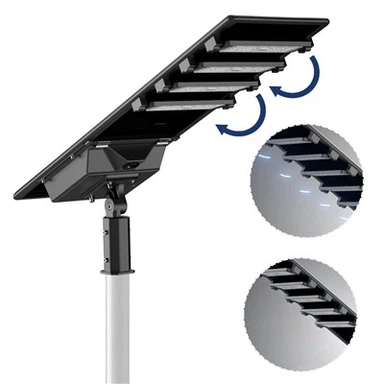
A solar street lighting system mainly consists of a photovoltaic (PV) panel, energy storage unit (battery), controller, LED luminaire, pole, and sensors.
During the daytime, the PV panel converts sunlight into electricity under sufficient solar radiation. This energy is stored in the battery through the controller. When ambient light drops below a preset threshold at night, the controller receives signals from the sensor and supplies power from the battery to the lighting fixture. Through well-designed system configuration and control strategies, stable and efficient operation of the street light can be ensured.
1.1 Lamp Power Calculation
Road lighting standards define clear requirements for different road types and lighting performance indicators. Parameters vary depending on road surfaces such as asphalt or concrete, and average illuminance serves as the core basis for engineering design and luminaire selection.
First, determine the appropriate light distribution type and layout based on road classification and width:
- Full cutoff lighting: suitable for main roads
- Semi-cutoff lighting: suitable for secondary roads
- Non-cutoff lighting: suitable for pathways, gardens, and pedestrian areas
Common installation layouts include:
- Single-sided arrangement
- Double-sided symmetrical arrangement
- Double-sided staggered arrangement
Based on the selected light distribution and layout, define:
- Mounting height of the luminaire
- Spacing between poles
- Pole height
Then, according to the required average road illuminance, calculate the required luminous flux using standard formulas.
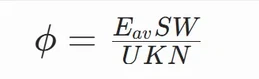
Eav = Average illuminance (lx)
φ = Luminous flux of the light source (lm)
K = Maintenance factor
N = Number of light sources per luminaire
W = Road width (m)
S = Pole spacing (m)
U = Utilization factor, obtained from the luminaire utilization factor curve
Based on the calculated luminous flux, select the appropriate light source. Common options include:
- High-pressure sodium (HPS) lamps
- LED luminaires
- Ceramic metal halide lamps
Among these, LED lighting is the preferred choice for solar street lights due to its:
- Directional light output
- Low power consumption
- High energy efficiency
- Long lifespan
Fast response
High-pressure sodium lamps, known for their reliability, are still widely used in traditional road lighting. It is important to note that higher lamp power requires larger battery capacity, which directly increases the overall system cost.
1.2 Photovoltaic Panel Capacity Calculation
Based on the lamp's power consumption profile during different nighttime periods, convert it into equivalent full-power operating hours per day using standard formulas.

Next, obtain solar resource data for the installation location, especially: Average daily solar radiation in the worst month. This data can be sourced from relevant standards or tools such as NASA's global solar energy database.
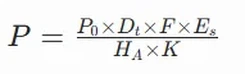
Finally, calculate the required PV panel capacity using standard design formulas.
P = PV panel capacity (kWp)
P₀ = Luminaire power (kW)
Dt = Daily operating time (h/day)
HA = Average daily global solar radiation on a horizontal surface in the worst month (kWh/m²/day)
F = Safety factor accounting for consecutive cloudy/rainy days (typically 1.2–2.0)
K = Overall efficiency of the PV system (typically 0.75–0.85)
Es = Standard irradiance under test conditions (constant), typically 1 kW/m²
Common solar panel materials include monocrystalline silicon, polycrystalline silicon, and flexible thin-film technologies.
Monocrystalline silicon PV panels offer high conversion efficiency and excellent stability, but come with relatively higher costs. Polycrystalline silicon panels provide a better cost-performance ratio and are the most widely used in practical applications.
Flexible thin-film panels have lower manufacturing costs compared to crystalline silicon, but also lower conversion efficiency. However, with ongoing technological advancements, thin-film solar cells are increasingly capable of replacing crystalline silicon in certain applications.
In terms of application scenarios, crystalline silicon panels are commonly used in large-scale projects such as power plants, while thin-film technologies are more often applied in green buildings and specialized architectural integration.
In engineering design, the final selection should be based on a comprehensive evaluation of project budget, performance requirements, and application conditions.
1.3 Battery Capacity Calculation
The battery capacity must be designed to ensure that the solar street light can operate normally for (n + 1) consecutive days, even after n continuous rainy or cloudy days without sufficient sunlight.
The system's working voltage is typically 12V or 24V, which must be properly matched with the PV panel configuration. Battery capacity is calculated using standard engineering formulas based on load demand and backup days.
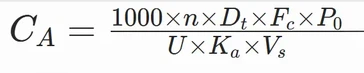
CA = Battery capacity (Ah)
n = Number of consecutive rainy/cloudy days
Dt = Daily operating time of the street light (hours)
Fc = Correction factor for battery discharge efficiency (typically 1.05)
P₀ = Power of the street light (kW)
U = Depth of discharge (DOD) of the battery, typically 0.5–0.8
Ka = Overall system efficiency factor, including battery discharge efficiency, controller, inverter, and AC circuit efficiency (typically 0.7–0.8)
Vs = System DC operating voltage (V)
Common types of batteries include nickel-cadmium (Ni-Cd), lead-acid, and lithium batteries.
Ni-Cd batteries are low in cost but require frequent maintenance, suffer from memory effect, and contain toxic materials. Lead-acid batteries offer good stability; among them, gel lead-acid batteries provide better sealing performance than valve-regulated lead-acid (VRLA) batteries, but have relatively fewer charge-discharge cycles.
Lithium batteries-especially lithium iron phosphate (LiFePO₄)-feature long lifespan, compact size, light weight, high charge and discharge efficiency, and are maintenance-free with strong reliability. However, they come with a higher initial investment cost. The final selection should be based on specific project requirements and overall cost considerations.
1.4 Controller Functions
The controller consists of two main parts: the charge/discharge circuit and the control system. It integrates multiple protection and control functions to ensure stable system operation.
The charge and discharge control function ensures normal energy flow within the system. Overcharge and over-discharge protection prevent battery degradation caused by excessive charging or discharging. The light–time control function enables the street light to automatically switch on and off based on ambient light conditions and preset timing schedules.
PWM (Pulse Width Modulation) control is used to regulate output voltage and harmonic characteristics, ensuring stable electrical performance. MPPT (Maximum Power Point Tracking), combined with constant current driving, works together to maximize solar energy utilization and improve overall system efficiency.
At present, controller functionality is highly advanced and well-developed. In addition, customized control strategies can be implemented according to specific engineering project requirements.
2. Key Considerations for Solar Street Light Selection
Based on calculated system parameters, solar street light selection should be evaluated from three main perspectives: technical performance, economic cost, and environmental adaptability.
2.1 Technical Performance
The technical parameters of key components such as street lights, photovoltaic panels, and batteries should comply with relevant standards and specifications.
The control functions of the street light system should meet actual application requirements. With the rapid development of IoT technology, remote monitoring and intelligent management functions should also be considered where applicable.
For regions with frequent rainy or cloudy weather, systems with grid power backup or hybrid wind-solar street lighting solutions should be considered to ensure stable and reliable operation.
2.2 Economic Cost
Initial investment should be carefully evaluated by comparing the procurement and installation costs of different brands and models in detail. While pursuing lower costs, product quality must also be prioritized, as unreliable products can significantly increase long-term maintenance and operational expenses.
Energy consumption, battery replacement cycles, and component maintenance costs should all be taken into consideration. Battery selection has a major impact on overall cost, and therefore should be evaluated comprehensively based on both battery type and the number of local rainy or cloudy days.
2.3 Environmental Adaptability
Suitable solar street lights should be selected based on local climate conditions. In high-temperature regions, luminaires, batteries, and PV panels with excellent heat dissipation and high-temperature resistance should be used. In cold regions, low-temperature resistant batteries or additional thermal insulation measures should be adopted.
In areas with strong wind conditions, the structural strength of the street light system must be carefully evaluated to ensure it can withstand the corresponding wind loads.
In environments with heavy rain, snow, dust, salt spray, corrosion, or explosion risks, street lights with appropriate protection ratings should be selected to prevent environmental factors from damaging system components.
Materials with strong anti-oxidation and anti-aging properties should be prioritized to ensure long-term durability and reliable outdoor performance.
Conclusion
Choosing the right solar street lighting system is not just about selecting products-it's about designing a reliable, cost-effective solution tailored to real project conditions. From accurate power calculations to environmental adaptability, every detail impacts long-term performance.
At Yahualighting, we specialize in providing customized solar street lighting solutions for global projects, with a full range of high-performance products and engineering support. Whether you are working on municipal roads, rural electrification, or large-scale infrastructure, our team is ready to help you design the optimal system.
Contact Yahualighting today to get a tailored solution and professional support for your next project.