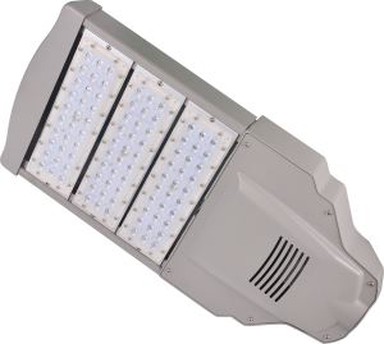
Extend LED Street Light Lifespan with Heat Dissipation & Design Optimization
Apr 09, 2026
As LED street lights move toward higher power output and more compact designs, thermal management inside the fixture becomes increasingly challenging-directly affecting overall stability and service life. In many projects, issues such as accelerated lumen depreciation, reduced brightness, and even complete fixture failure begin to appear after just a few years of operation. This not only increases maintenance costs but also undermines long-term project returns. This article explores how to enhance LED street light lifespan through advanced heat dissipation strategies, optimized optical design, and modular driver solutions-ensuring reliable performance in outdoor lighting applications.
Temperature: The Core Factor Affecting LED Street Light lifespan
From a technical perspective, LED chips themselves are capable of long lifespans. However, once integrated into a complete street lighting system, their actual service life is influenced by multiple factors-among which temperature is the most critical.
LEDs are inherently temperature-sensitive devices. Changes in junction temperature have a direct impact on both luminous efficacy and longevity. When the junction temperature continues to rise, it not only accelerates lumen depreciation but can also cause color shift and even lead to device failure.
Studies show that for every 1°C increase in junction temperature, LED luminous efficiency drops noticeably. Once the temperature exceeds certain thresholds, the risk of failure rises sharply. Therefore, effectively controlling operating temperature is the key to extending the lifespan of high-power LED street lights.

Limitations of Traditional Heat Dissipation: Passive Cooling Falls Short at High Power
Most LED street lights on the market still rely on conventional passive cooling methods. Typically, this involves using aluminum heat sinks to increase surface area and dissipate heat through natural air convection. While this approach works reasonably well for low- to mid-power applications, its limitations become evident as power levels increase.
On one hand, improving heat dissipation requires larger heat sinks, which significantly increases the size and weight of the fixture-making installation and transportation more difficult. On the other hand, in high-temperature environments, heat sinks can accumulate heat rather than effectively dissipate it, creating a "heat island effect" that keeps internal temperatures elevated over long periods.
This issue is particularly pronounced in hot climates during summer. Even when the lights are turned off during the day, internal temperatures can remain significantly higher than ambient levels, accelerating the aging of electronic components and reducing overall system reliability.

Active Thermal Design: From Heat Storage to Heat Dissipation
To truly extend the LED Street Light lifespan, relying solely on conventional heat dissipation structures is no longer sufficient. A more effective approach is to optimize the system from a holistic design perspective-particularly by introducing active thermal management concepts that enable continuous airflow within the fixture.
One practical solution is to incorporate the "chimney effect" into the pole and luminaire housing design. By leveraging the natural tendency of hot air to rise, a stable internal airflow channel can be formed. When the internal temperature exceeds the ambient level, hot air is naturally expelled upward, while cooler air is drawn in from below.
This process creates a continuous cycle of heat exchange without requiring additional energy consumption. As a result, the internal temperature of the luminaire can be maintained close to ambient conditions շուրջ the clock, making this approach especially suitable for outdoor lighting applications in high-temperature regions.

Housing & Airflow Optimization: Key Details for Higher Efficiency
Building on this concept, optimizing the luminaire housing structure is equally critical to improving heat dissipation performance. By carefully designing the positions of air inlets and outlets-and integrating dustproof and insect-resistant features-it is possible to ensure smooth airflow while enhancing overall product reliability.
In addition, for certain high-power applications, airflow can be further enhanced by incorporating auxiliary components such as fans or jet-style exhaust structures. These solutions increase air velocity inside the fixture, allowing heat generated by the LED chips to be expelled more rapidly, thereby effectively reducing junction temperature.
This combined approach of "active + passive" thermal management significantly overcomes the limitations of traditional cooling systems and provides a more robust solution for high-performance LED street lighting.

Secondary Optical Design Optimization: Lower Power, Less Heat
Beyond thermal management, optical design also plays an indirect yet important role in determining the lifespan of LED street lights. As road lighting fixtures, LED street lights typically require secondary optical design to achieve proper light distribution. If the light distribution is not well optimized, higher power levels are often needed to meet illumination standards-resulting in increased energy consumption and additional thermal load.
By optimizing lens structures to direct light more precisely onto the roadway, it is possible to maintain required lighting performance while reducing overall power consumption. This, in turn, lowers heat generation and helps extend the lifespan of the luminaire. In essence, efficient optical design can be seen as an "indirect thermal management strategy."
Driver Reliability: The Hidden Bottleneck in LED Street Light lifespan
Among the various factors affecting LED street light longevity, driver reliability stands out as a critical constraint. Extensive field experience shows that many failures in LED street lighting systems are not caused by the LED chips themselves, but by driver malfunctions.
A key weak point lies in electrolytic capacitors, which are highly sensitive to temperature. Their lifespan decreases significantly as operating temperature rises. In outdoor, high-temperature environments, these capacitors are often the first components to fail-leading to complete fixture shutdown.
This "weakest link" effect means that the actual service life of LED street lights is often far shorter than their theoretical lifespan, making driver design a crucial aspect of overall system reliability.

Modular Driver Design: Improving Maintenance Efficiency and System Lifespan
To address driver-related limitations, optimization can be approached in two ways. First, improving thermal management can lower the operating temperature of the driver, directly extending its lifespan. Second, adopting a modular design allows vulnerable components, such as electrolytic capacitors, to be separated from the main circuit into replaceable functional modules.
When these components reach the end of their service life, only the affected module needs to be replaced-eliminating the need to replace the entire driver. This approach not only significantly reduces maintenance costs but also improves repair efficiency and minimizes the inconvenience of high-elevation work. By implementing modular driver solutions, the overall service life of LED street lights can more closely match the theoretical lifespan of the chips themselves.
Systematic Design Trend: From Single-Point Optimization to Holistic Upgrades
From a system perspective, extending the lifespan of high-power LED street lights is not achieved by a single technological breakthrough. Rather, it results from the coordinated optimization of thermal structures, optical design, and power systems. Only by considering heat management, energy efficiency, and maintenance convenience during the design phase can a truly long-lasting lighting solution be realized.
For engineering projects, this approach translates into lower maintenance frequency, higher reliability, reduced lifecycle costs, and ultimately, improved return on investment.

Overall, by incorporating active thermal structures, optimizing secondary optical design, and implementing modular driver solutions, it is possible to effectively lower LED junction temperatures, slow lumen depreciation, and extend the LED street light lifespan as well as the lifespan of critical electronic components. This systematic design philosophy is set to become a key direction for the future development of high-power LED street lights, providing more reliable technical support for smart cities and sustainable lighting initiatives.